MCP issues detected. Run /mcp list for status.--- slug: "difference-between-taper-and-fade" title: "Taper vs. Fade: What’s the Real Difference? | FadeByFame" description: "Confused about the difference between a taper and a fade? Henderson barbers break down styles, transitions, and which cut fits your look. Book at FadeByFame." h1: "Taper vs. Fade: Understanding the Difference Before Your Next Haircut" author: "FadeByFame" publishedAt: "2026-03-31" keywords: ["difference between taper and fade", "taper vs fade", "fade vs taper", "taper and fade difference", "what's the difference taper fade"] category: "haircuts" image: "https://res.cloudinary.com/dn4eyx4md/image/upload/f_auto,q_auto,w_1200/v1/fadebyfame/blog/difference-between-taper-and-fade.png" primaryKeyword: "difference between taper and fade" searchVolume: 2900 keywordDifficulty: 0
Taper vs. Fade: Understanding the Difference Before Your Next Haircut
You are sitting in the barber chair. The barber drapes the cape over you, adjusts the neck strip, and asks the most important question of the day: "What are we doing today?" You know you want the sides short and the top long, but then you hit a wall. You aren't quite sure if you should ask for a taper or a fade. You’ve heard both terms used interchangeably, but you suspect there is a difference between taper and fade that might change how you look in the mirror for the next three weeks.
This is the most common point of confusion for guys coming into FadeByFame here in Henderson, NV. Most people use these words to describe the same general idea: hair that gets shorter as it moves down the head. While they share that basic concept, the execution, the amount of skin showing, and the overall silhouette are completely different. If you walk in asking for a fade but you actually wanted a taper, you might end up with a lot more skin showing than you bargained for.
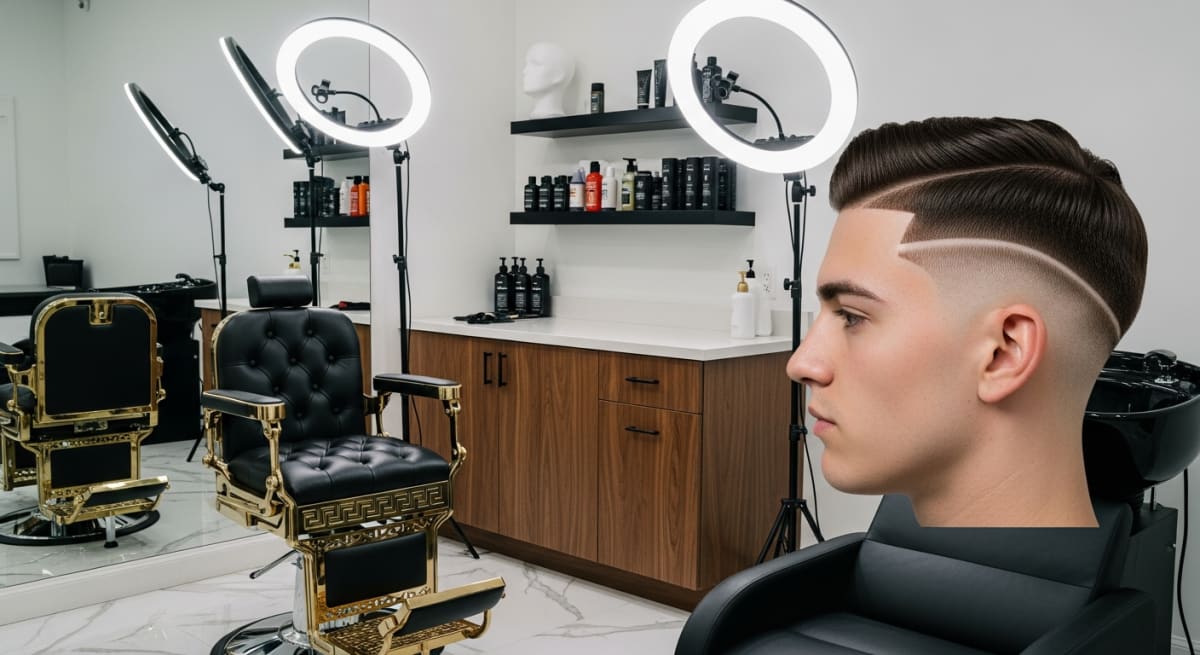
I am going to break down exactly what makes these two techniques unique. We will look at the mechanics of the cut, the tools we use, how they grow out, and which one actually suits your lifestyle and face shape. By the time you finish this, you will know exactly what to tell your barber to get the look you actually want.
What Exactly Is a Taper?
A taper is a classic, conservative approach to shortening the hair. The defining characteristic of a taper is that the hair changes length gradually from the top down to the natural hairline. In a traditional taper, your barber is shortening the hair as they move toward the ears and the nape of the neck, but they are not necessarily taking it down to the skin.
The taper follows the natural lines of your hair. We usually focus on the sideburns and the very bottom of the neckline. The rest of the hair on the sides is blended smoothly, but it maintains a certain amount of weight and coverage. When you look at a guy with a taper from the side, you still see a defined hairline around the ears and across the back.
Barbers often use a combination of clippers and shears to achieve a taper. Because a taper is more about a subtle transition than a dramatic "disappearing" act, it allows for more versatility. It is the go-to choice for professional environments or for guys who want a clean look without the aggressive edge of a skin-tight fade. If you like the look of a traditional gentleman’s cut but want it to look sharp and intentional, the taper is your move.
What Exactly Is a Fade?
A fade is a more aggressive, high-contrast version of a short haircut. While a taper follows the natural hairline, a fade often ignores it. The hair "fades" away before it even reaches the natural bottom of your hair growth. In most cases, a fade ends at the skin. This creates a gradient effect that looks like the hair is literally evaporating into the scalp.
The transition in a fade happens over a much smaller surface area than a taper. A fade can start low, mid, or high on the head. A high fade might start right at the temple and be skin-short within an inch or two. A low fade stays closer to the ears but still results in a skin-exposure look that a taper lacks.
When we do a fade at FadeByFame, we use multiple tools. We start with clippers to set the initial lines, use various guard sizes to create the "blur," and then often finish with a foil shaver or a straight razor to get that "bald" or "skin" finish. This is what creates that sharp, ultra-clean aesthetic that has become the standard in modern barbering. The fade is bold, it is loud, and it requires a high level of precision to get the transition perfectly smooth without any visible lines or "steps" in the hair.
The Primary Difference Between Taper and Fade
The easiest way to remember the taper and fade difference is to look at the hairline. A taper keeps the hairline intact. A fade removes it.
With a taper, your barber is blending the hair down, but you will still have hair around your ears and at the base of your neck. It is a modification of the natural growth. With a fade, the barber is creating a new, artificial "hairline" that is actually a blend into the skin. The skin becomes part of the hairstyle.
Another major difference is the surface area of the blend. In a taper, the transition from long to short happens over a larger area, usually encompassing the entire side and back of the head. In a fade, the blend is often more "compressed." This means the change from a number two guard to skin happens quickly, creating that high-contrast "pop" that makes a fade look so sharp.
Maintenance is also a deciding factor in the taper vs fade debate. A taper grows out more gracefully because it respects the natural hairline. You can usually push a taper an extra week or two before it starts looking "shaggy." A fade, because it relies on that skin-tight contrast, starts to lose its crispness within 7 to 10 days. Once the stubble grows back in on the skin-faded area, the "blur" disappears, and the cut looks significantly different.
Popular Taper Styles and Variations
Tapers are not a one-size-fits-all cut. There are several ways we can adjust a taper to fit your style.
The Low Taper is the most subtle. We only blend out the very bottom of the sideburns and the bottom inch of the neckline. This is perfect for guys who want a "hidden" cleanup. It makes the haircut look fresh without looking like you just got a haircut.
The Mid Taper moves the transition slightly higher, usually ending around the temple area. This gives a bit more definition to the side of the head and allows for a sharper silhouette while still keeping plenty of hair on the sides.
The High Taper starts the blend much higher up, often near the crown or the top of the parietal ridge. This creates the most contrast possible within the taper category. It is a great middle ground for someone who wants the intensity of a fade but still wants to keep the natural hairline around the back of the neck.
We also have the Neck Taper. Sometimes a guy wants to keep his sideburns full but wants the back of his neck to be blended out so it doesn't look messy as it grows. This is a common request for longer styles where the bulk is kept on the sides but the edges are cleaned up.
Popular Fade Styles and Variations
The world of fades is even more diverse. Depending on where the transition starts and how short it goes, the vibe of the cut changes entirely.
The Skin Fade (or Bald Fade) is the gold standard. We take the hair all the way down to the scalp using a foil shaver or razor. This creates the most dramatic contrast and is the foundation for most modern urban styles.
The Drop Fade is a technique where the fade line literally "drops" behind the ear. Instead of a straight horizontal line around the head, the fade follows the contour of the skull. This is excellent for guys with a flatter back of the head as it creates a more balanced, ergonomic profile.
The Burst Fade is usually focused only around the ear. It "bursts" out from the ear area, leaving the hair at the back of the neck long. This is the classic look for a modern mohawk or "mullet-fade" hybrid. It is edgy and specific.
The Shadow Fade is a fade that does not go down to the skin. We might start the shortest length at a "0" or a "0.5" guard. You still get the gradient effect, but you see a "shadow" of hair rather than bare scalp. This is a great option for guys with sensitive skin who get irritated by foil shavers.
Taper vs Fade: Which One Should You Choose?
Deciding what's the difference taper fade and which one belongs on your head comes down to a few practical considerations.
First, consider your professional environment. If you work in a high-level corporate office or a very conservative field, a taper is usually the safer bet. It looks polished and intentional without being distracting. It says "I care about my appearance" without saying "I spend three hours a week in a barber shop."
Second, look at your head shape. If you have bumps, scars, or a very irregular skull shape, a skin fade will highlight every single one of those features. Because the hair is removed, the scalp is on full display. A taper, because it keeps more hair on the sides, can actually help camouflage some of those irregularities by using "weight" to create a smoother silhouette.
Third, think about your hair type. If you have very fine or thinning hair, a high skin fade can sometimes make the top look even thinner by creating too much contrast. In those cases, a taper or a shadow fade can help maintain the appearance of density. If you have thick, coarse hair, a fade is often the best way to manage the bulk and keep the sides from sticking out like a tennis ball as they grow.
Finally, consider your schedule. If you can only get to FadeByFame once a month, do not get a skin fade. You will look great for 10 days and messy for 20. A taper will serve you much better over a four-week period. If you are the kind of guy who is in the shop every two weeks like clockwork, then the fade is a great way to keep your look sharp and modern.
Communicating with Your Barber in Henderson, NV
When you walk into our shop, the best thing you can do is be specific. Instead of just saying "give me a fade," tell us where you want it to start and how short you want the bottom to be.
If you say, "I want a mid-skin fade," we know exactly what that means: the transition starts at the temples and goes down to the scalp. If you say, "I want a low taper," we know to keep your hairline intact but clean up the edges.
Photos are always helpful. A picture of a "fade" to one person might look like a "taper" to another. Showing us a photo allows us to point out the technical aspects of the cut. We can tell you, "That guy has a drop fade with a textured top," and then we can discuss if that actually works with your hair growth patterns.
Remember that at FadeByFame, we are here to consult, not just cut. If you ask for a fade but we see that a taper would better suit your face shape or professional needs, we will tell you. The goal is to make sure you look as good leaving the shop as you do when you walk back in for your next appointment.
FAQ: Common Questions About Tapers and Fades
Is a taper fade a real thing or just a confusing name?
The term "taper fade" is technically a bit of a contradiction, but it has become common slang in the industry. Usually, when someone asks for a taper fade, they are asking for a taper—meaning the sideburns and neckline are faded to the skin, but the rest of the hairline is preserved. However, because the terms are so mixed up, always clarify with your barber if you want your sideburns and neck to disappear or if you want the whole side of your head faded.
Which one is better for a round face shape?
A fade is generally better for round face shapes. Because a fade removes the bulk from the sides and goes very short, it creates a more vertical, elongated silhouette. This helps slim the face. A taper keeps more hair on the sides, which can sometimes add width to an already round face. If you have a round face, a high fade with some volume on top is usually the most flattering combination.
Does a fade cost more than a taper?
In most quality shops, including FadeByFame, the price is the same because they both require a high level of skill and time. However, a fade technically takes more work and more tools to get that "blur" perfectly right. A taper requires more shear work and detail around the ears. We view them as equal services that both require a master barber's touch.
Can I get a taper if I have long hair on top?
Absolutely. In fact, tapers are the preferred choice for many longer styles like pompadours, quiffs, or even man-buns. A taper allows you to keep the length and flow of the hair on the sides while making sure the edges look clean and professional. A fade with very long hair on top can sometimes look too disconnected or "top-heavy" unless that is the specific aesthetic you are going for.
Will a fade cause more skin irritation than a taper?
It can. Since a fade often involves taking the hair down to the skin with a foil shaver or razor, guys with sensitive skin or curly hair may be more prone to razor bumps or ingrown hairs. If you know you have sensitive skin, tell your barber. We can adjust the technique by using a "0" blade instead of a foil shaver, which gives you the fade look without the irritation.
How do I know if I have a "high" or "low" hairline?
Your barber will tell you this during the consultation. A high hairline usually means you have more space between your ears and the top of your head, which gives us more room to "stretch" a fade. A low hairline means we have to compress the blend more. This is why the same haircut can look different on two different people. We customize the height of the fade or taper to balance your specific anatomy.
If you are still undecided, the best move is to start with a taper. You can always turn a taper into a fade, but you cannot turn a fade back into a taper until the hair grows back. Come see us at FadeByFame in Henderson, NV, and we will help you figure out the best transition for your specific look.
Book your next cut at FadeByFame to get the sharpest taper or fade in Henderson.